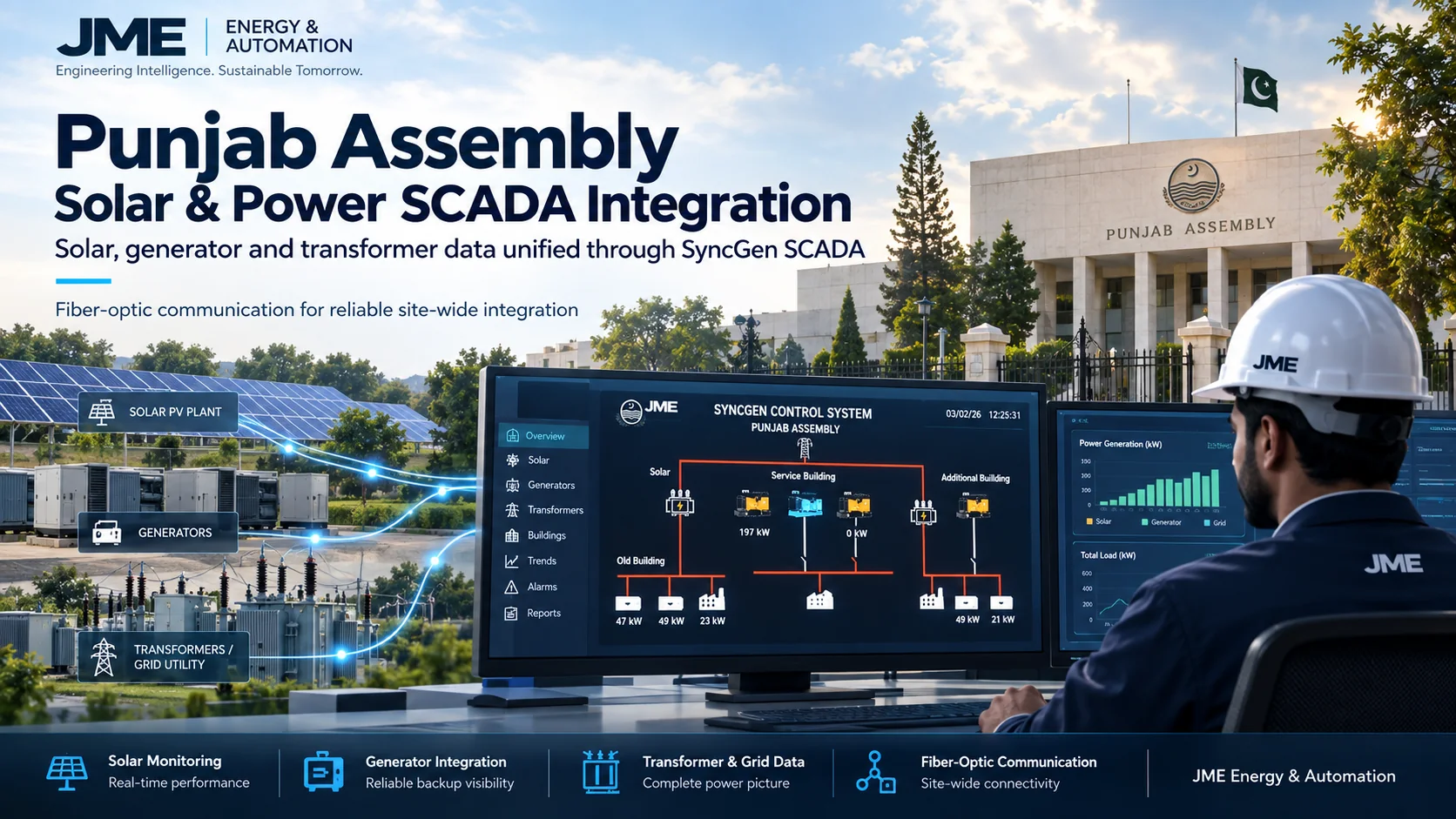
Concept illustration of JME Energy & Automation’s Punjab Assembly solar and power SCADA integration project. Technical evidence from the installed system is shown below.
Punjab Assembly Solar & Power SCADA Integration
JME Energy & Automation executed the system-integration scope at Punjab Assembly as a sublet integration partner, bringing solar-inverter information together with generator, transformer-side and power-system data in one SyncGen SCADA environment.
The project required more than adding another solar screen. The engineering task was to create one practical operating view across equipment located in different parts of the site, including a remote solar-inverter area and the main power room.
Project Challenge
The Sofar solar inverters were installed a significant distance from the main power room, while the site team also needed visibility of generator- and transformer-side electrical information. Keeping these systems isolated would have forced operators to review separate equipment and interfaces instead of understanding the power system as one connected operating environment.
JME Integration Approach
- Sofar solar inverter data acquisition and integration
- Generator- and transformer-side power data brought into the monitoring layer
- SyncGen SCADA development for centralized source and load visibility
- Single-line-style visualization of the electrical architecture
- Alarm, trend and operating-status visibility
- Fiber-optic communication between the remote solar area and the main power room
- Testing and commissioning of the integrated monitoring path
Why Fiber-Optic Communication Was Used
The distance between the solar inverter installation and the main power room made the communication layer an important part of the engineering design. JME used fiber-optic cable to provide a robust long-distance data path instead of depending on an extended copper communication run across the site.
The communication network was treated as part of the control-system architecture, not as an afterthought. Reliable data transport was necessary before a dependable centralized SCADA view could be built.
Unified SyncGen SCADA View
The completed SyncGen interface provides a centralized view of the solar contribution together with conventional power-system information. This allows operators to review source status, electrical values and system behavior from one monitoring environment rather than treating the solar installation and the rest of the power system as separate islands.
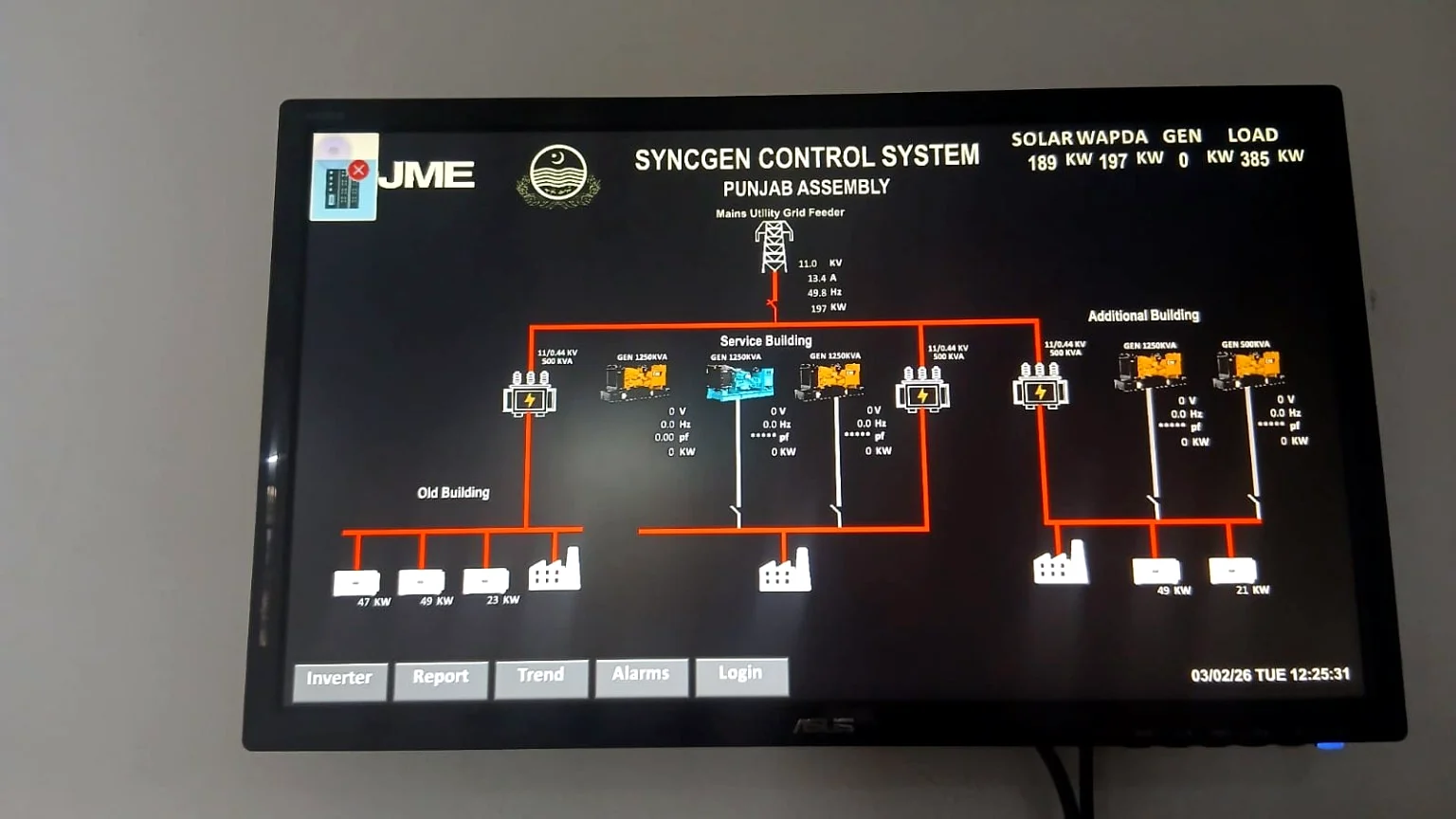
Project evidence from the installed Punjab Assembly SyncGen SCADA system, showing centralized monitoring of solar and conventional power-system information.
The SCADA architecture was developed to make the system easier to understand during normal operation and troubleshooting. The value of the project is therefore not only data collection; it is presenting the data in a form that helps the site team understand how the connected energy sources relate to each other.
Engineering Result
- Centralized monitoring of solar and conventional power-system information
- Long-distance solar communication over fiber optic
- Sofar inverter integration into SyncGen SCADA
- Generator and transformer-side visibility in the same operator environment
- Improved operational understanding through one unified screen architecture
- A maintainable integration layer that can support future monitoring expansion
JME Project Role
JME Energy & Automation executed this work as a sublet integration partner. This case study describes JME’s engineering and system-integration contribution and does not imply that JME was the primary tender holder.
A Practical Example of Multi-System Integration
Punjab Assembly demonstrates the type of brownfield integration work that industrial facilities often require: existing power equipment, a newer solar system, physical distance between equipment areas and the need to make everything understandable from one operator interface.
A similar JME brownfield monitoring project can be seen in the Parliament House Solar Monitoring & SCADA Integration case study, where newer Huawei and legacy Guanya solar data were unified through direct communication and dedicated RTU energy metering.
Is This the Punjab Assembly EMS Project?
JME’s executed scope at Punjab Assembly was primarily solar and power SCADA plus energy monitoring, rather than the broader hybrid EMS architecture used on JME’s BESS projects. The integration brought solar-inverter, generator and transformer-side electrical information into one SyncGen operator environment for unified visibility.
For broader industrial EMS and hybrid-power control, see SYNCGEN EMS and the BESS + Solar + Genset + Grid integration case study.
Need to Connect Solar, Generators and Existing Power Systems?
No guesswork. Know before you buy. Send JME your SLD, equipment list, inverter details or existing-system information. We can first identify the likely communication path, integration gaps and technical risks before you commit to a full project.
Related JME engineering: SCADA & centralized control · PV–genset control · Energy Management Systems · Industrial Energy Monitoring · More project evidence.