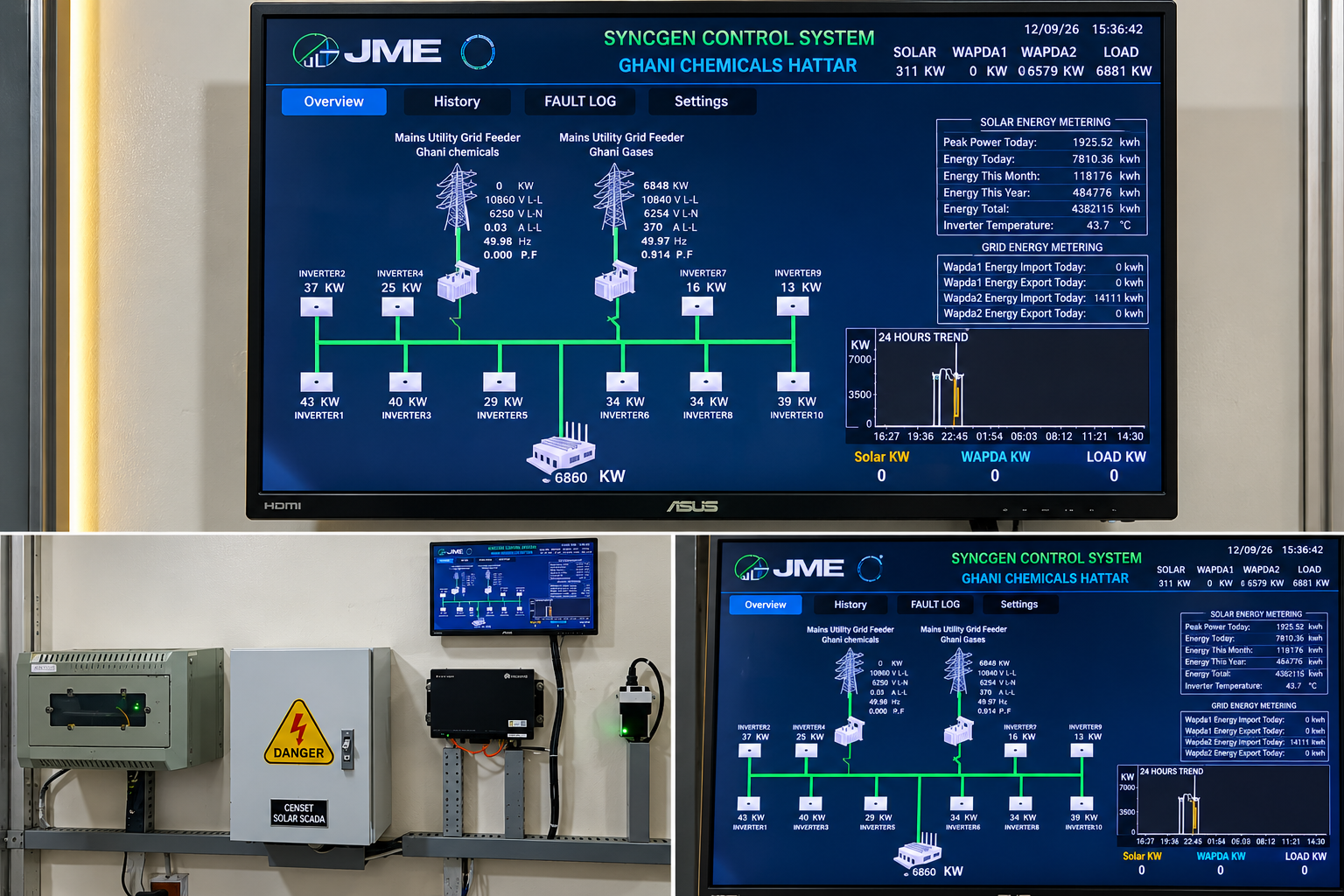
Ghani Chemicals Hattar — Dual-Utility Solar Export Control
JME Energy & Automation implemented a SYNCGEN-based monitoring and export-control system for a solar installation operating with two utility/WAPDA sources. The solution coordinates plant measurements so unwanted solar export can be controlled against the site’s real operating behaviour.
2 Utility Feeders
Independent visibility of both incoming utility/WAPDA sources and their power flow.
Solar + Load Monitoring
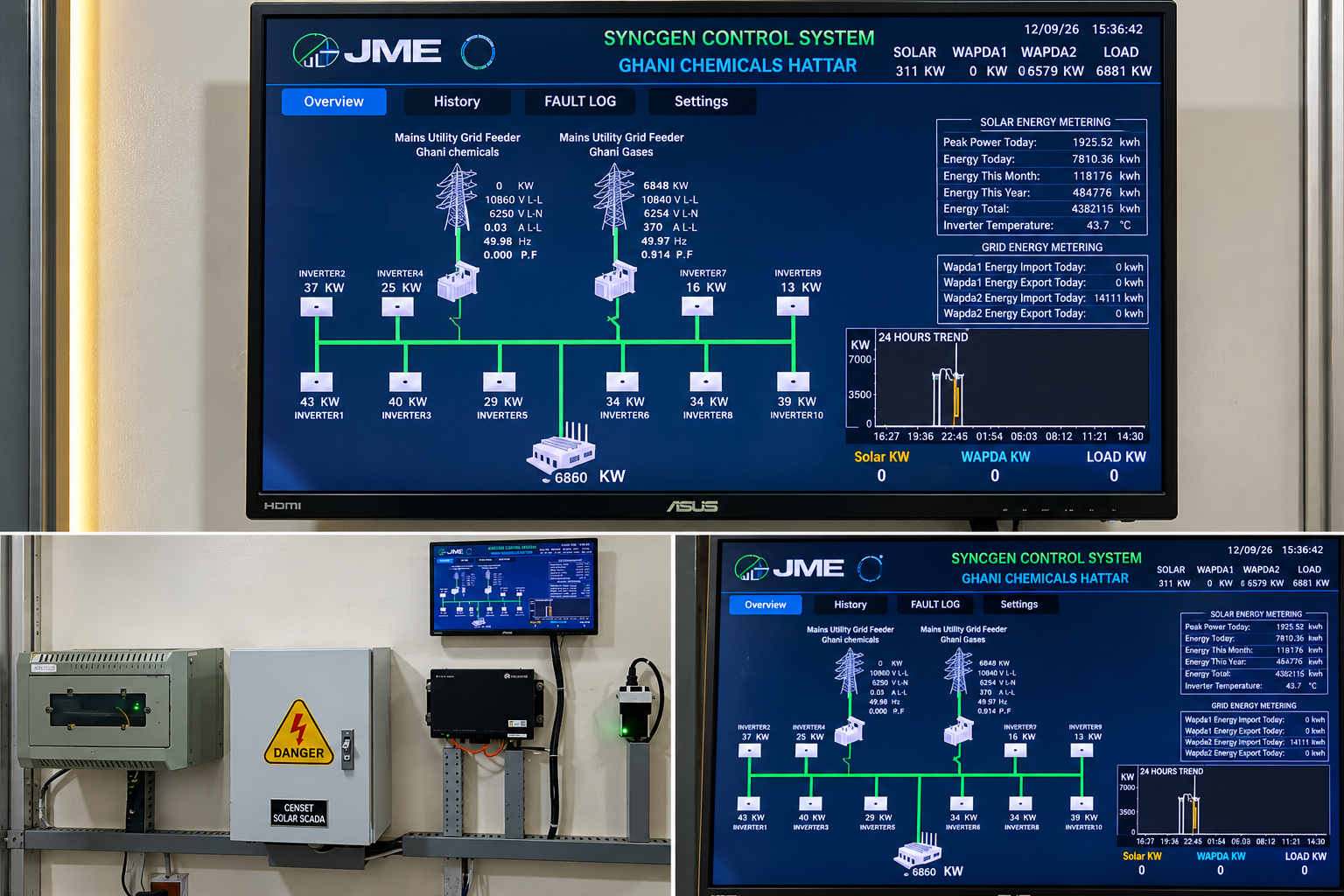
Central overview of solar production, plant demand and grid power flow.
Source & Load Trends
Historical trending helps operators review changing load, solar and utility conditions.
The engineering requirement
With two utility incomers and multiple solar inverter inputs, export control cannot rely on a single static number. The control system must continuously observe the relevant sources and plant load, then respond to changing operating conditions.
Industrial Zero Export Controller Case Study in Pakistan
This project demonstrates the difference between a simple zero-export device and an engineered industrial zero-export control system. With two utility/WAPDA incomers, multiple solar inverter inputs and changing plant demand, the control logic must evaluate the correct measurement points continuously rather than depend on one isolated meter value.
The engineering objective is to maintain the required export limit while preserving as much usable solar generation as practical. That requires verified CT and meter direction, synchronized source/load measurements, communication health, defined control margins, trend review and site-specific tuning.
For the commercial service scope, see Zero Export Controller & Solar Export Limit in Pakistan.
JME implementation
Measure → Monitor → Limit Export → Trend → Verify
The installed system provides a unified SCADA view of both utility feeders, individual solar inverter contributions, total plant load and energy information. Source and load trends are recorded so the operating response can be reviewed instead of relying only on instantaneous values.
Documented System Outcome
The project gives the site a centralized view of solar, load and both utility sources while supporting zero-export control across the dual-utility arrangement. Trending provides the engineering evidence needed to verify behaviour over time and support future fine-tuning.
Measurement status: The disclosed project evidence describes control functionality and operating visibility, not a verified financial ROI or fuel-saving percentage. Export compliance, avoided penalties and solar-energy recovery depend on dated meter records, plant operating conditions and approved setpoints; numerical benefits should be published only after those records are assessed.